

A customer lands on your product page, wants to buy — and the item is out of stock. Without a notification option, that sale walks away to a competitor. With one, you capture their email and win the sale back the moment you restock. The good news: Magento 2 ships with basic "notify me when back in stock" functionality — it just needs to be switched on, and this guide walks through every setting. (The default covers simple products with a plain text link; for configurable and bundle product subscriptions, custom messages, and scheduled notifications, the Out of Stock Notification extension does it out of the box — more on that below.)
How to Enable "Notify Me When Back in Stock" in Magento 2
Two admin settings work together here: out-of-stock products must be visible in the catalog, and product alerts must be enabled. Then a cron setting controls when the emails actually go out. Step by step:
Step 1: Make Out-of-Stock Products Visible in the Frontend
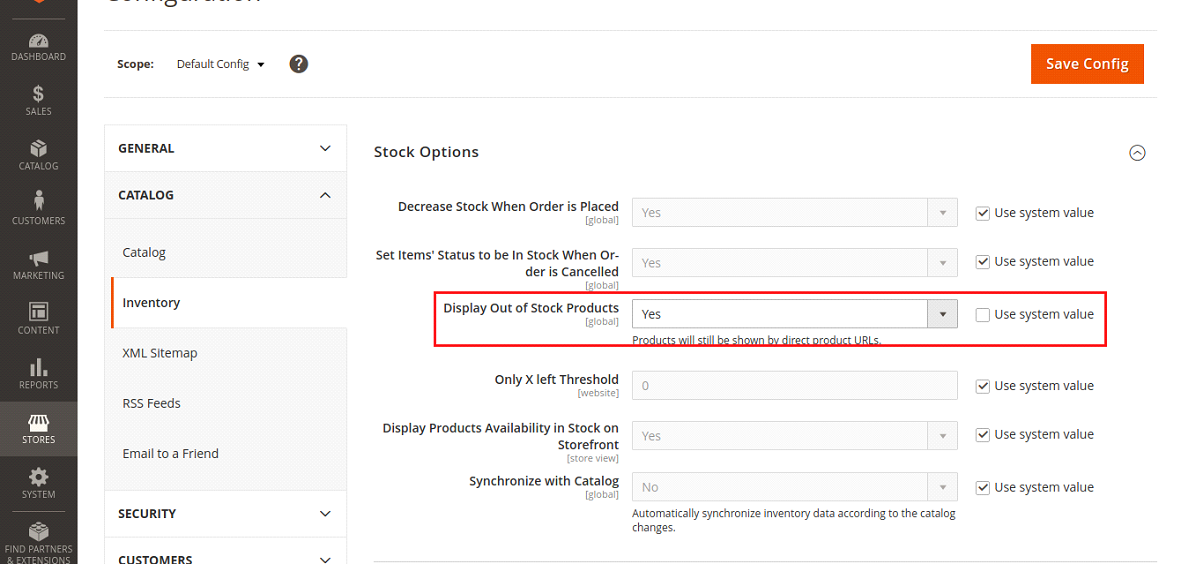
By default, Magento 2 hides out-of-stock products from the catalog — and customers can't subscribe to a product they can't see. To show them:
- In the admin panel, go to Stores > Configuration > Catalog > Inventory.
- Under Stock Options, set Display Out of Stock Products to Yes.
- Click Save Config.
Step 2: Enable the "Notify Me When This Product Is in Stock" Alert
Now enable the product alert itself:
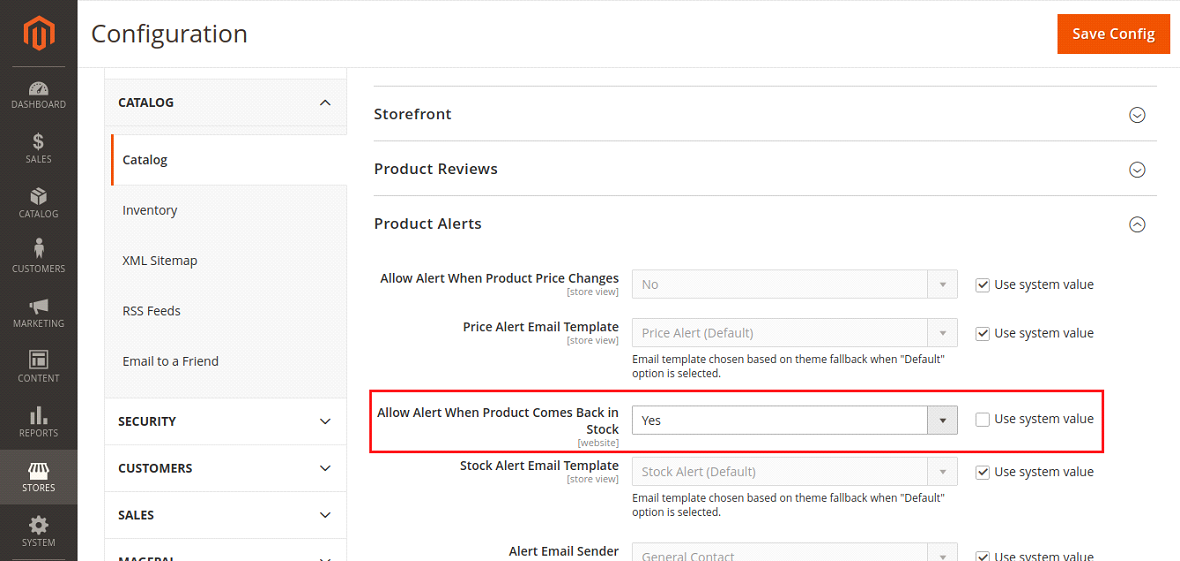
- Go to Stores > Configuration > Catalog > Product Alerts.
- Set Allow Alert When Product Comes Back in Stock to Yes. You can also pick the email template used for the notification here.
- Click Save Config and flush the cache.
Step 3: Configure When the Alert Emails Are Sent
This is the step most guides skip — and the most common reason "notify me" setups silently send nothing. Alert emails are dispatched by cron, not instantly at restock. In the same Product Alerts configuration page, open Product Alerts Run Settings and set the Frequency (daily, weekly, or monthly) and Start Time, plus an error email recipient if you want failure reports. And make sure your server's Magento cron is actually running — no cron, no emails, regardless of every other setting.
Step 4: Verify the Link on the Frontend
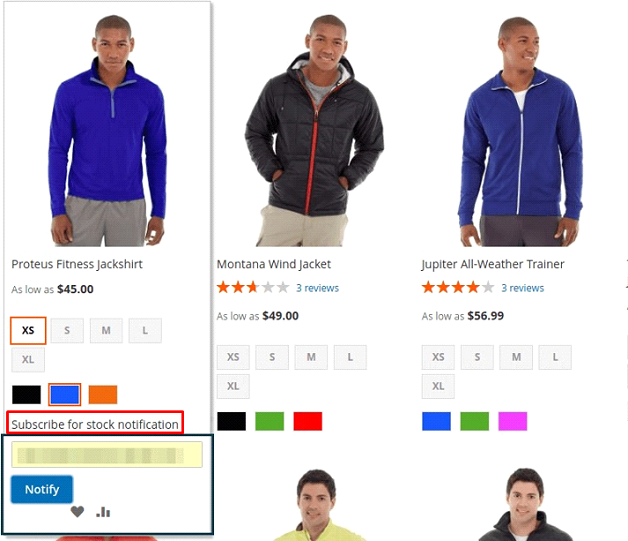
With both settings saved, every out-of-stock product page now shows a "Notify me when this product is in stock" link:
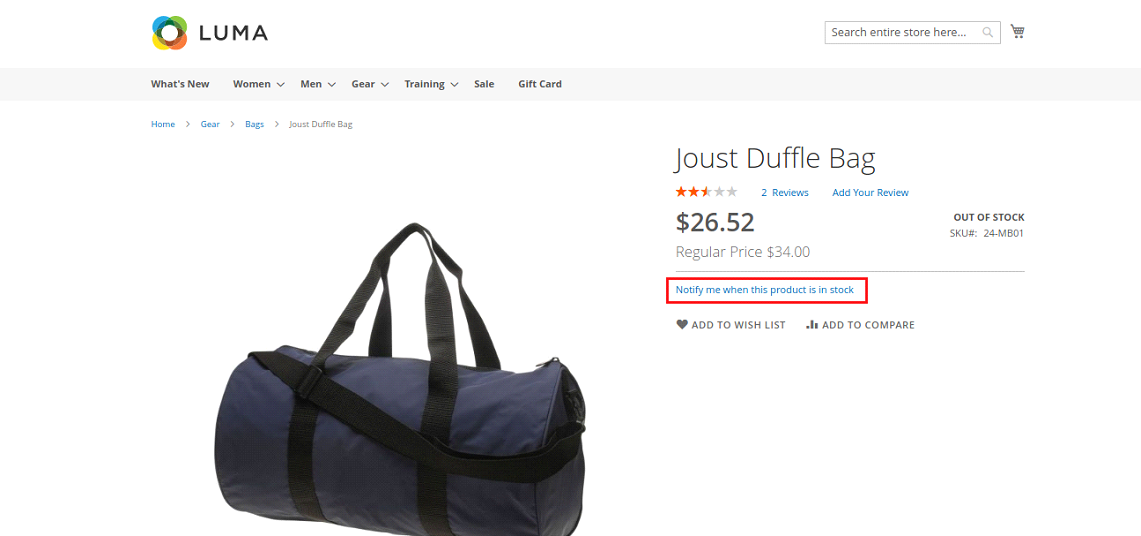
Clicking it subscribes the customer to an email notification for that product. Note that in default Magento, the customer must be logged in — guests who click the link are sent to the login page first.
Step 5: View Alert Subscribers in the Backend
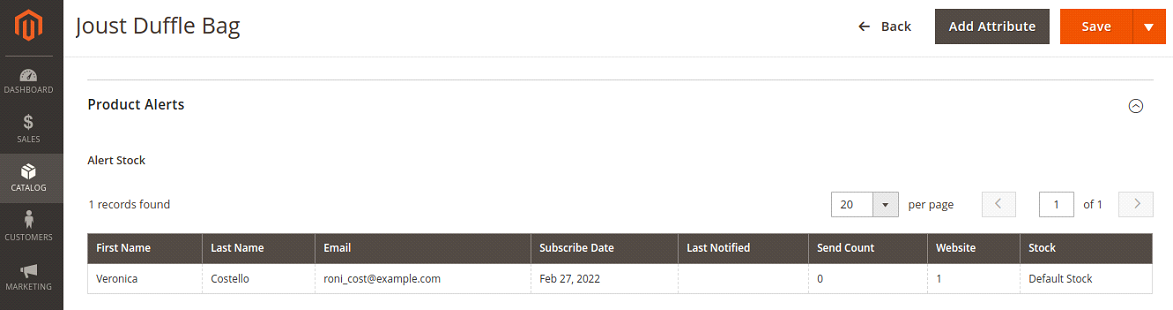
To see who's waiting on a product, open it in the admin: Catalog > Products, edit the product, and scroll to the Product Alerts section — it lists every customer subscribed to the back-in-stock notice. Once you restock the product (set the quantity and stock status back to In Stock), the next alert cron run emails everyone on the list:
Where the Default Functionality Stops
The built-in alerts work, but they're basic: subscriptions require a customer account, the frontend shows only a plain unstyled text link with no customizable message, and configurable or bundle products aren't handled per-variant. If those limits matter for your store, the Magento 2 Out Of Stock Notification extension by MageAnts picks up where the default stops:
- Stock notification subscriptions for configurable and bundle products.
- Custom back-in-stock notification messages displayed in the subscription box.
- Notification emails sent automatically or scheduled for a specific time.
- Automatic back-in-stock and out-of-stock product notifications.
- Subscription access limited to specific customer groups if needed.
Get in touch with our experts if you'd like help choosing the right setup for your catalog.
Wrap Up
That's the complete setup: make out-of-stock products visible, enable the alert, configure the cron run settings so the emails actually send, and watch the subscriber lists on your product pages. Every name on those lists is a sale waiting for your next restock — and if the default's account-only, plain-link version leaves too many of those sales uncaptured, the extension route removes the friction. Questions about the article? Feel free to contact us.
